
Backstage Pass: Get to know Kian Soltani
Ahead of his performances of Schumann’s Cello Concerto with the Philharmonia in Leicester and London, Kian Soltani shares his journey to the work, and his own musical roots.
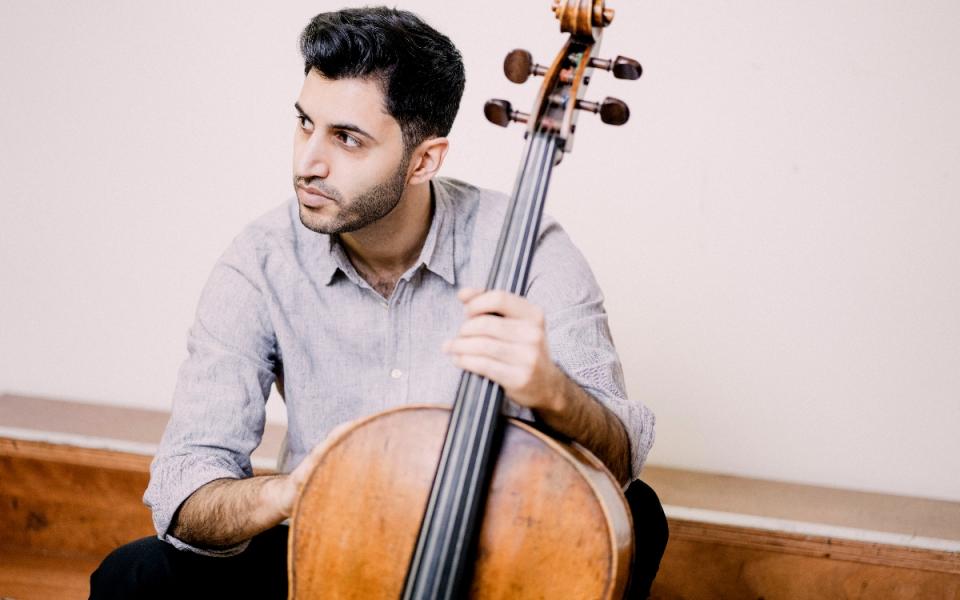
How would you describe Schumann’s cello concerto to someone who has never heard the work before?
It’s like musical poetry. It is a very intimate piece, where the lyrical language is the driving force, as opposed to instrumental virtuosity. At the same time, it’s full of inner turbulence, particularly the first movement has rapid emotional changes and contrasts. The second movement is one of the most beautiful love duets Schumann has ever written, and the final movement is like opening a bottle of sparkling champagne, full of joy and overflowing energy!
You’ve recorded Schumann’s Cello Concerto before. How do you approach returning to a work that you’ve studied so closely before; can you make new discoveries?
After recording the Schumann, I took two years off performing and playing the piece. Now coming back to it, I’m rethinking everything and try to approach it fresh. New discoveries are hard to make when you know a piece inside out, but rather, it allows a complete freedom on stage to make spontaneous decisions and react instantly to impulses given by the musicians of the orchestra or the conductor.
Each hall and each stage requires a slightly different way of playing to fit that room and acoustic, so each performance is a new discovery in itself!
You were Principal Cellist of Daniel Barenboim’s West-Eastern Divan Orchestra, where young musicians from Israeli and Arab backgrounds play side-by-side together. How does this background of playing with musicians from different cultures, as well as your own identity, inform your approach to music-making?
The experience in the orchestra was crucial. Not only on a musical level but also on a human level.
My own identity is inextricably linked to my Persian roots so I feel a strong sense of responsibility to be a messenger for Persian music and the Persian people, especially in a time when the people of Iran have been cut off from the rest of the world.
What is your favourite thing about life as a cellist?
Not having to sit next to anyone on the plane; it’s just me and my cello next to me!
The final movement is like opening a bottle of sparkling champagne, full of joy and overflowing energy!

